
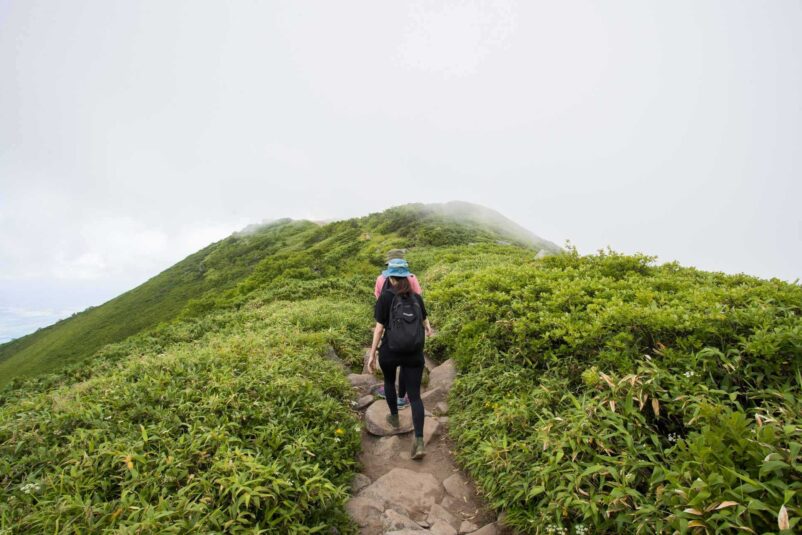
Niseko hiking on Mt. Yotei means climbing a 1,898-meter active volcano. The Mt Yotei trail system has four routes, all rated challenging. Expect 6 to 8 hours round trip. Summer, from late June to early October, is safest. Pair the climb with onsen, local produce, and festivals for a full Niseko summer trip.
Key Takeaways
- Mt Yotei trail has four main routes: Makkari, Hirafu (Hangetsu Lake), Kyogoku, and Kimobetsu.
- The mountain reaches 1,898 meters inside Shikotsu-Toya National Park.
- It’s part of the wider Niseko Volcanic Group, which opens fully every summer.
- Average trail gradients hit 27%, with sections up to 50% near the top.
- Hokkaido summer hiking season runs from late June through early October.
- There are no water sources on the mountain past the trailhead.
- Post-hike, Niseko’s onsen springs are heated by the same volcanic activity as Yotei.
- Aspect Niseko offers luxury accommodation in Niseko with direct Mt. Yotei views.
The Mesmerising Mt. Yotei
Mt. Yotei is an active stratovolcano in Hokkaido. It rises 1,898 meters above the Niseko valley. Locals call it “Ezo Fuji” for its resemblance to Mount Fuji.
The mountain anchors the Niseko Volcanic Group, a cluster of peaks that opens fully each summer. This includes trailheads into ancient beech forest and subalpine meadows. It’s listed among Japan’s 100 Famous Mountains, drawing serious Niseko hiking enthusiasts each season.
Which Mt Yotei Trail Should You Choose?
There are four main routes up the mountain. Each starts from a different town.
| Trail | Starting Point | Distance | Difficulty | Notes |
| Makkari | Makkari village | Around 6 km | Very challenging | Most popular, well-marked, steep |
| Hirafu (Hangetsu Lake) | Near Kutchan/Hirafu | 6.2 km | Very challenging | Closest to Niseko resorts |
| Kyogoku | Kyogoku town | 5 km | Very challenging | Quieter, less maintained |
| Kimobetsu | Kimobetsu town | Similar length | Very challenging | Rarely used, needs alpine skill |
The Hirafu route via Hangetsu Lake sits closest to Niseko accommodation. It’s also known for some of the steepest sections on the mountain.
How Hard Is the Hike?
This is not a casual walk. All four routes are rated challenging by hikers and trail databases.
Average gradients sit around 27%. Near the summit, sections reach 50%. The trail splits into 10 stages, from trailhead to peak.
Lower stages wind through birch and spruce forest. Above the treeline, the path turns to loose volcanic rock. The final push involves scrambling over boulders by hand.
Most fit hikers reach the summit in 4 to 5 hours. The descent typically takes 3 to 4 hours. Less experienced hikers should allow 6 to 8 hours total.
When Is the Best Time to Hike Mt. Yotei?
Hokkaido summer hiking season runs from late June through early October. Trails are free of snow during this window. Weather also tends to stay more stable.
Every trail level opens up during this stretch, from gentle forest loops to full ridge walks. Rain makes the narrow Yotei trail muddy fast. Postpone if heavy rain fell the previous day.
What Should You Pack?
- Sturdy hiking boots with strong ankle support
- At least 3 to 4 liters of water per person
- Hiking poles, especially useful on the descent
- Gloves for scrambling sections near the summit
- High-energy snacks and a basic first-aid kit
- A map, compass, or GPS device as backup
- Sun protection and insect repellent for forest sections
There are no freshwater streams on the mountain. Whatever you carry from the trailhead has to last.
What Will You See Along the Way?
Lower forest sections shelter Hokkaido wildlife. Hikers often spot Siberian chipmunks and hear woodpeckers drumming nearby. Alpine wildflowers appear once you clear the treeline.
The summit rewards climbers with a crater roughly 700 meters wide. A full rim circuit takes about 90 minutes. On clear days, views stretch toward the Sea of Japan.
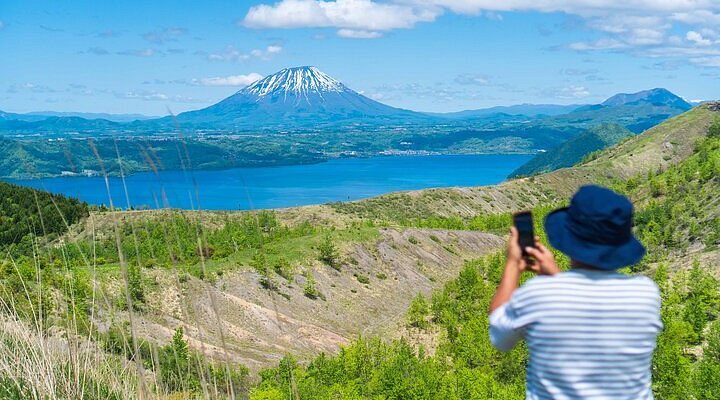 Make It Part of a Bigger Niseko Summer Trip
Mt. Yotei is the headline climb, but it’s only one piece of Niseko’s summer season. Building your trip around it makes the whole visit worthwhile.
- Cool down at an onsen. The same volcanic activity powering Yotei heats Niseko’s hot springs year-round. Wash thoroughly before entering, since baths are shared. Swimsuits aren’t worn, and towels shouldn’t touch the water. Some traditional baths restrict tattoos, though many now offer cover stickers or tattoo-friendly hours.
- Eat what Hokkaido does best. Summer is peak season for the region’s produce. Sweet corn and asparagus arrive fresh from June through August. Local dairy farms produce some of Japan’s finest milk and cheese. Otaru, an hour from Niseko, supplies uni, scallop, crab, and fresh fish daily.
- Catch a local festival. The Kutchan Jaga Matsuri celebrates Hokkaido’s potato harvest with food stalls and parades. Region-wide hanabi fireworks light up towns like Kutchan and Niseko Town through summer. Weekly farmers markets bring cheesemakers, brewers, and bakers together.
- Try the singletrack too. The NAMBA trail network offers 13 to 16 kilometers of purpose-built mountain biking. Trails were designed with Swiss expertise, covering flow, cross-country, and downhill riding. It’s pedal-access and free to ride, right against the same mountain backdrop.
 Where to Stay Before and After Your Climb?
An early start matters most for a safe Mt. Yotei climb. Staying close to the trailhead makes that far easier.
Aspect Niseko offers luxury accommodation in Niseko with apartment-style suites in Hirafu. Many suites have direct Mt. Yotei views, useful for reading the mountain’s weather before you leave. The location gives hikers quick access to the Hangetsu Lake trailhead.
It’s also a comfortable base for everything else summer in Niseko offers. Rest tired legs after the descent, then head out for local produce, an onsen soak, or a nearby festival. For anyone building a full Niseko summer trip around Mt. Yotei, Aspect Niseko is a practical, comfortable choice.
Ready to Plan Your Climb?
Mt. Yotei rewards careful preparation with one of Hokkaido’s best summit views. Choose your trail, pack properly, and watch the weather closely.
For a comfortable base near the trailhead, contact Aspect Niseko to book your stay in Hirafu.
Frequently Asked Questions
How long does it take to hike Mt. Yotei?
Most hikers need 6 to 8 hours round trip. Fit climbers may finish faster.
Is Mt. Yotei harder than Mt. Fuji?
Many experienced hikers consider Yotei more technical. The trail is narrower and steeper in places.
Can beginners hike Mt. Yotei?
It’s possible with good fitness and preparation. It isn’t recommended for first-time alpine hikers without training.
Is there a hut to stay overnight on Mt. Yotei?
A basic hut exists near stage nine. Most hikers still complete the climb in one day.
What is the best trailhead for Niseko visitors?
The Hangetsu Lake trailhead near Hirafu and Kutchan sits closest to Niseko accommodation.
What else can I do after hiking Mt. Yotei
Try a local onsen, sample summer produce, or catch a regional festival like Kutchan Jaga Matsuri.
Do I need a guide for Mt. Yotei?
A guide isn’t required on the main routes. Less experienced hikers may still benefit from one.
What months should I avoid hiking Mt. Yotei?
Avoid winter and early spring. Snow and ice make the trail dangerous without specialized gear.